Remove or Trim? How to Tell if a Tree Really Has to Come Down
Plenty of trees that look doomed need a trim, and a few that look fine are close to failing.
October 13, 2026 · 4 min read
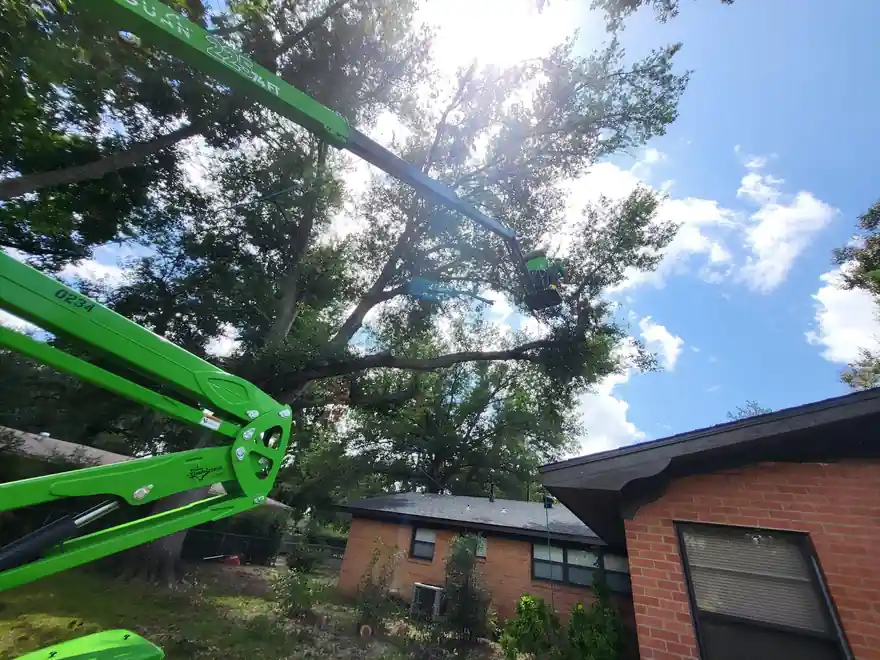
Most people call a tree service with the same question: does this thing have to come down? It is a fair thing to ask, and it deserves a straight answer instead of a sales pitch. A removal is permanent and it costs more than a trim, so the decision should rest on what the tree is actually doing.
Lester's Tree Service says plainly on its own site that if a tree doesn't need to come down, they'll tell you, and suggest a simple trim instead. Here is how to size up a tree yourself before anyone arrives, and what we look at when we walk a property in Bullard, Tyler or Lindale.
Start with what the tree is telling you
Trees show trouble in a few predictable ways. Walk all the way around yours, look up into the crown, and then look down at the ground around the base. Warning signs worth noting:
- Leaves or needles that turn brown while neighboring trees stay green.
- Bark that is peeling away in sheets and leaving bare wood underneath.
- Mushrooms or soft, crumbly wood at the base of the trunk.
- A lean that is new, or soil that has lifted or cracked on one side of the roots.
- A vertical crack in the trunk, or a fork where the two stems pull apart.
One sign by itself rarely means the end. Two or three together start to tell a story, especially if the tree stands close to your house, a fence, a barn or a driveway.
What a trim can fix
A lot of tree worries turn out to be limb worries. Dead branches in an otherwise healthy oak, a heavy limb reaching over the roof, branches rubbing against the siding, and growth that blocks the view at the end of your driveway are all trimming jobs. Taking out the dead wood and the crossing limbs lightens the crown and gives the tree a better shot at living another few decades.
Crown thinning is a good example. Selectively removing some interior branches lets wind pass through the canopy instead of shoving against it like a sail. That reduces the load on the trunk and roots during a storm. It is also the kind of work that saves a homeowner real money compared with a full removal, which is exactly why a trustworthy crew brings it up.
Good pruning cuts matter too. Limbs should come off back at the branch collar, not flush with the trunk and not left as a long stub. Bad cuts invite decay, and a tree that gets butchered once tends to need more work later.
When removal is the honest answer
Some trees can't be saved by pruning, and pretending otherwise just delays the bill and adds risk. Removal is usually the right call when the tree is dead all the way through, when the trunk is hollow or rotting at the base, when a large split runs down the stem, or when the roots have lifted on a tree that is leaning toward something you care about.
Pines and oaks behave differently here. A pine that has gone brown from top to bottom is almost never coming back, and it gets brittle faster than most people expect. An oak can lose a large share of its crown to a storm and still recover, so a half-broken oak is often worth a careful look before anyone commits to cutting it down.
Location changes the math as well. A dead tree in the back corner of a pasture is a different problem than a dead tree twenty feet from your bedroom. The closer a failing tree stands to people and structures, the sooner the decision needs to be made.
Getting a straight answer
The simplest way to settle it is to have someone come look. Lester's offers free quotes with no obligation to buy, and on the emergency side of the business the team also gives free diagnostics, so a representative can judge whether a tree or branch can handle the next round of wind. If the honest answer is a trim, that is what the quote will say.
On a removal quote, the things that shape the job are tree height, the type of wood, its condition, the equipment it takes, and where the tree stands. A tall pine over a house is a different job from a leaning oak in an open field, and the quote should show that. The crew also treats tree removal and stump removal as two separate jobs, so ask about both up front if the stump matters to you.
A quick way to decide
If the tree is healthy and the problem is a limb, trim. If the tree is alive and the problem is wind exposure or crowding, ask about thinning. If it is dead, hollow, split, or heaving out of the ground near something valuable, plan on removal and get it scheduled before the next storm season.
Not sure which bucket your tree is in? Call (903) 978-0098 and ask for a free estimate. We'll come out, look it over, and tell you what we would do if it were our yard.
Lester's Tree Service, (903) 978-0098
Call (903) 978-0098More articles
The First Hour After a Storm Drops a Tree on Your House
The first sixty minutes decide how safe and how costly the next few days will be.
Picked, Not Chunked: Why Grapple Trucks and Cranes Change a Big Removal
Lifting a big piece out beats cutting it into firewood and hauling it by hand.